
Decision Integrity (DIL) is a research and coaching enterprise working on holistic approaches that benefit sustainable systems, projects, communities, organisations and societies with special emphasis on transformative resilience.

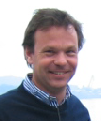
Bill Sharpe
Science and technology evolution is driving change in almost every aspect of our lives. Understanding technology means understanding how people use it, and how markets and societies influence and shape it. Bill Sharpe specialises in futures work where science and technology plays a role, and undertakes bespoke projects in business strategy and public policy. He specialises in taking on problems that need fresh approaches and new concepts rather than application of routine methods. He is an Associate Professor at the University of West England.
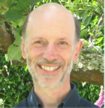
David Adams
is a consultant, coach, leader and strategist with a fascination for work with collective intelligence. He has trained in native wisdom teachings in North America, is an accredited church mediator, convenes a regular dialogue group, and runs a small farm. His consultancy, Adams Associates (Scotland) Limited, has grown from earlier experience in international corporate consulting, directing and managing voluntary programmes, trade finance and credit management. He works with manufacturing and service organisations in the private, public and third sectors. He is a founder member of the Coaching Forum at Said Business School, Oxford, and a member the Scottish Institute for Business Leaders.
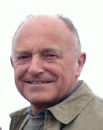
Graham Leicester
is Director of the International Futures Forum. IFF is a non-profit organisation that responds to critical issues facing business, government and communities. Graham previously ran Scotland’s leading think tank, the Scottish Council Foundation, founded in 1997. From 1984-1885 he served as a diplomat in HM Diplomatic Service, specialising in China (he speaks Mandarin Chinese} and EU (including Private Secretary to the Minister for Europe. He has a strong interest in governance, innovation and education, is a senior adviser to the British Council on those issues, has previously worked with OECD, the World Bank Institute and other agencies on the themes of governance in a knowledge society and the governance of the long term.

Dr Daniel Christian Wahl, F.R.S.A
Daniel is a consultant and researcher on issues of sustainability and resilience. He was until recently Academic Director at Findhorn College. He works with the International Futures Forum on world modelling and world game facilitation. Hoe also contributes to Gaia Education and CIFAL Findhorn (a UNITAR affiliated training scheme). He is a Ph.D. Supervisor at the Centre for the Study of Natural Design at the University of Dundee. He contributes to the work of the CLEAR Village.Foundation and the State of the World Forum. He holds degrees in biology (Edinburgh), holistic science (Schumacher College) and design for sustainability (Dundee)



Dr Ian Page
Is a research scientist who specialises in research strategy and scenario planning. He is a specialist in investigating impending change that most strategists overlook and picking up early warning signals. As a senior technologist at Hewlett Packard Research Laboratories he also provided for many years the ‘grit in the oyster’ for many budding inventors. His current interests are in interaction of energy sources, land use, civilisation collapse and human ecological systems. He is a member of the International Futures Forum and an exponent of the three horizons futures model.
Rebecca Hodgson
Holds a BA degree in history from Edinburgh University where she also did postgraduate work on the history and sociology of science. She is an experienced conceptual and information researcher supporting a number of International Futures Forum projects. She co-author and researcher of the IFF World Model and Game. She is currently in training as a Steiner teacher.